
Backstage with Neal Wayment & Nathaniel Breedlove
The cameras are off. The band has packed up.
This week, two artists — one drawn to laughter and rags-to-riches stories, the other drawn to darkness and the gritty edges of the human experience — both ended up asking the same question.
What makes a person unforgettable?
Neal Wayment
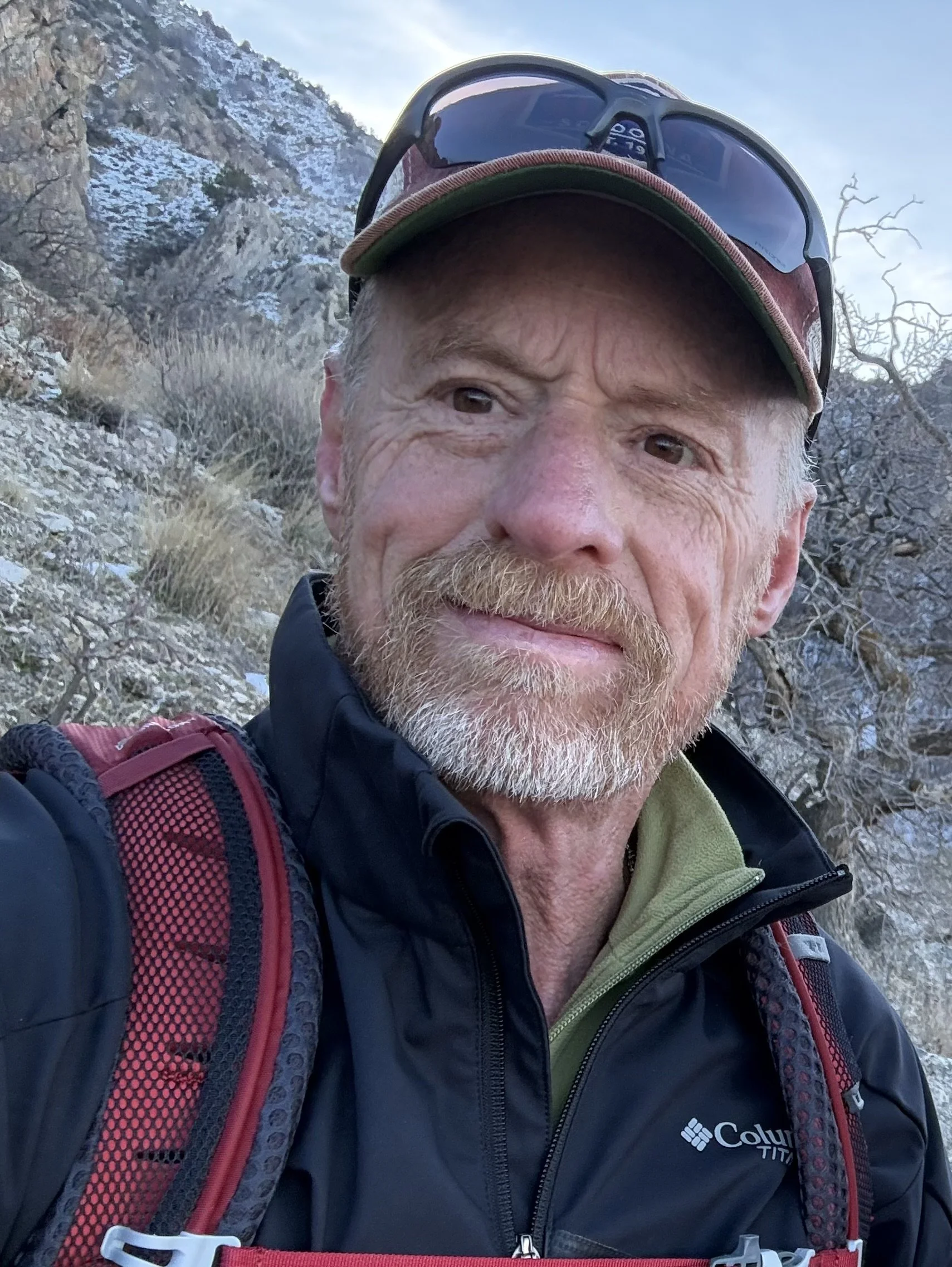
Painting Charlie Chaplin
Neal carries an idea with him that shapes everything he makes.
"We come into this world trailing clouds of glory."
It's a belief that something extraordinary lives in each of us — something present from the beginning, before life gets complicated. His work in pastels, watercolor, and graphite is an attempt to remind people of that. To find the light that already exists, even when it's easy to miss.
Charlie Chaplin felt right for that.
Because Chaplin's story is, underneath everything, a story about a person who had almost nothing and turned it into something the whole world wanted to watch. His childhood in London was marked by poverty severe enough that he spent time in a workhouse — a fact that gets lost behind the iconic image of the bowler hat and the cane. His mother struggled with her mental health. The instability of his early years would have broken most people.
It didn't break him. He folded it into comedy instead.
What Chaplin understood — and what Neal is drawn to — is that laughter can carry weight. That you can make an audience feel something true without ever telling them directly. That the most human moments are sometimes the funniest ones.
Neal has been reading, researching, watching films — looking for the person underneath the performance. He hopes visitors walk away with a simple reminder: the capacity to create something meaningful lives in all of us.
When he's not in the studio, Neal is outdoors — hiking, backpacking, biking, out on the golf course.
Nathaniel Breedlove

Painting Marlon Brando
Nathaniel goes straight to the human form.
That's where his work lives — in the complexity of the body, the weight of a posture, the way a figure can carry an entire emotional world without saying a word.
His artistic identity, as he puts it, is rooted in the human experience.
Marlon Brando made sense for that.
Brando wasn't a movie star in the traditional sense — he was something harder to categorize. He trained under Stella Adler, absorbed the Method, and brought a rawness to the screen that Hollywood hadn't quite seen before. His characters were dark, layered, uncomfortably real. Audiences shifted in their seats watching him because they recognized something — not a hero, not a villain, just a person carrying contradictions.
His influence stretched well beyond his own films. The template he set for screen acting — internal, physical, resistant to performance for its own sake — runs through decades of actors who came after him.
Nathaniel connected to that immediately. He's been watching Brando's films, planning to keep them running in the background while he works — letting the performances seep into the portrait the same way Brando let his characters seep into every scene.
He wants people to walk away asking questions about the human experience. Not answers. Questions.
After a stretch away from drawing, Nathaniel said it simply:
His soul needs to be creative again.
This project is giving him that.
What This is All About
Neal and Nathaniel are two of 15 local artists creating portraits for:
Influencers Over Time — Part 2: Artists + Entertainers
This five-part exhibition is inspired by TIME Magazine's 100 most influential people of the 20th century — exploring the people whose ideas, creativity, and courage shaped the world we live in today.
📅 May 1–3 📍 West Point, Utah 🎟 Free tickets! Grab your slot before they fill up here:
